.avif)
Warehouse operations leaders spend a lot of time solving problems on the floor. Productivity gaps, attendance issues, high turnover. What gets less attention is how many of those problems are created before a worker ever shows up.
The gap between someone being booked and someone arriving ready to work is where a lot of operational uncertainty lives. And for most warehouses, that gap is bigger than it looks.
A distribution center in the midwest books ten workers for a Monday morning start. Seven show up. Of those seven, two do not have the right footwear for the floor. One cannot be confirmed as the person who completed the sign up process. By 8am the operation is already running short and the floor supervisor is making calls.
This is not a rare scenario. It is Tuesday in most warehouses.
The root issue is that traditional onboarding was not built to catch these gaps. It was built to collect information, not confirm it. A name, a phone number, a photo upload. None of it connected. None of it confirmed in any meaningful way before the job started. Workers moved through a slow, manual, paper heavy process and came out the other side with no real guarantee that the right person with the right equipment was going to walk through the door.
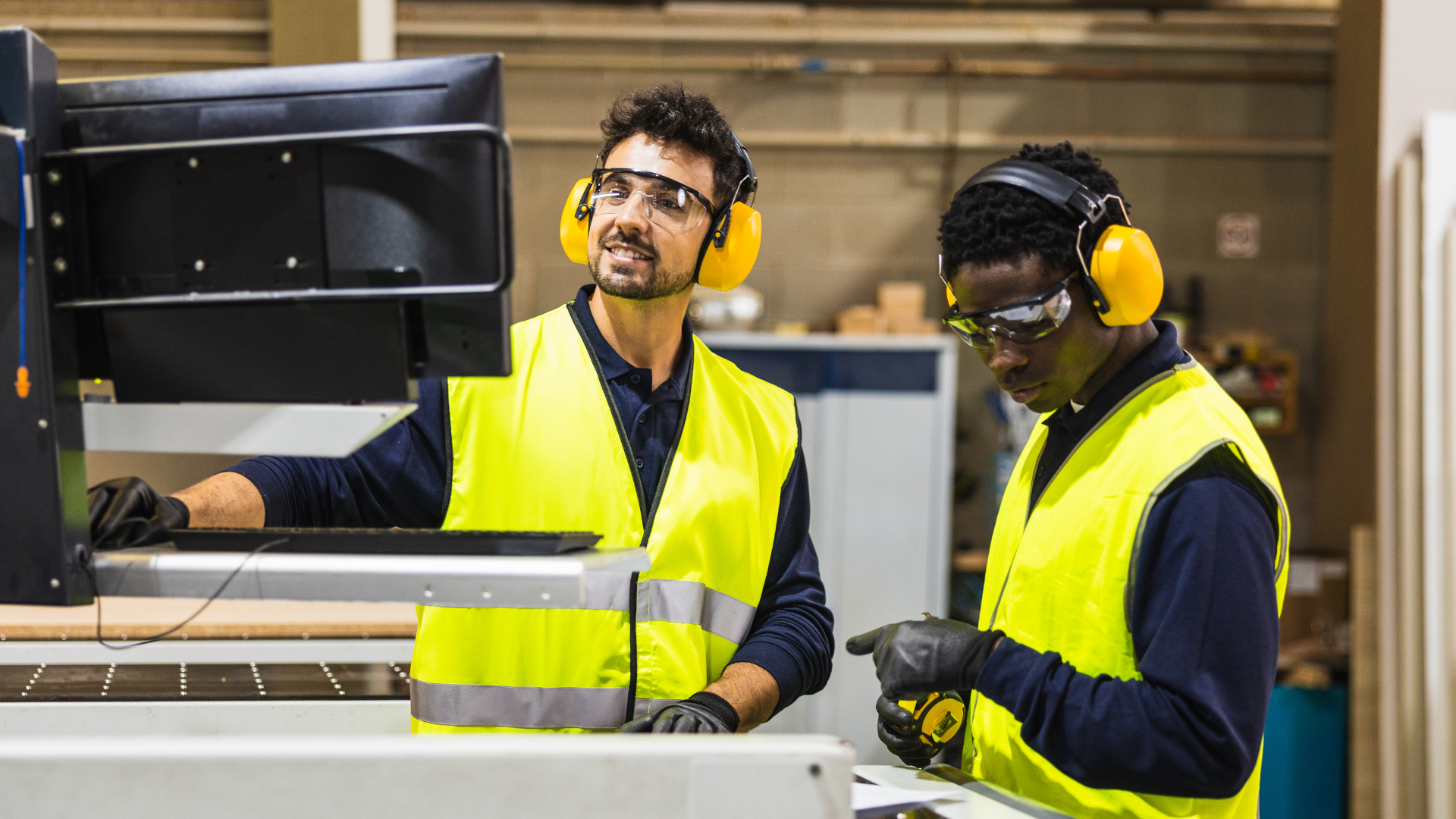
A food processing plant in the southeast requires hard hats, safety vests, and work boots on the floor. Standard stuff. But confirming that a worker actually has that equipment before they arrive has historically come down to asking them to bring it and hoping for the best.
When someone shows up without the right gear the options are bad. Send them home and eat the gap, or let them on the floor and take on the liability. Neither is a good answer to a problem that should have been caught before the job ever went live.
Traditional onboarding collects. Platform sign up confirms.
That distinction matters more than it sounds. When a Spotter joins the Spotwork marketplace today, they move through a sign up flow that was built from the ground up to close the gap between being booked and being ready.
AI powered identity matching cross-references a government issued ID against a real time selfie, confirming the person joining the marketplace is exactly who they say they are. AI equipment confirmation analyzes a submitted photo against job requirements, checking for safety vests, hard hats, and work boots before a Spotter is approved for roles that demand them. If all checks pass, approval is automatic. If something is flagged it routes to review, keeping operations teams informed without creating bottlenecks.
The entire process takes 4 to 5 minutes. What used to require manual review at every step now handles itself for the vast majority of Spotters joining the platform.
That is not an incremental improvement on traditional onboarding. It is a different model entirely.
Every open job you post carries an assumption. That the person who shows up is who they said they were, that they have what they need to work, and that they are ready to contribute from the first hour.
When that assumption breaks down it is not just an inconvenience. It is overtime for your core team, a gap in output, and another entry in a turnover cycle that is already expensive.
The warehouses reducing these problems are not just filling open jobs faster. They are building confidence into the process before the job starts. That starts with who is joining the marketplace and what they are showing up with.
Getting that right is not a nice to have. For operations running at scale, it is the difference between a floor that runs and one that does not.