.avif)
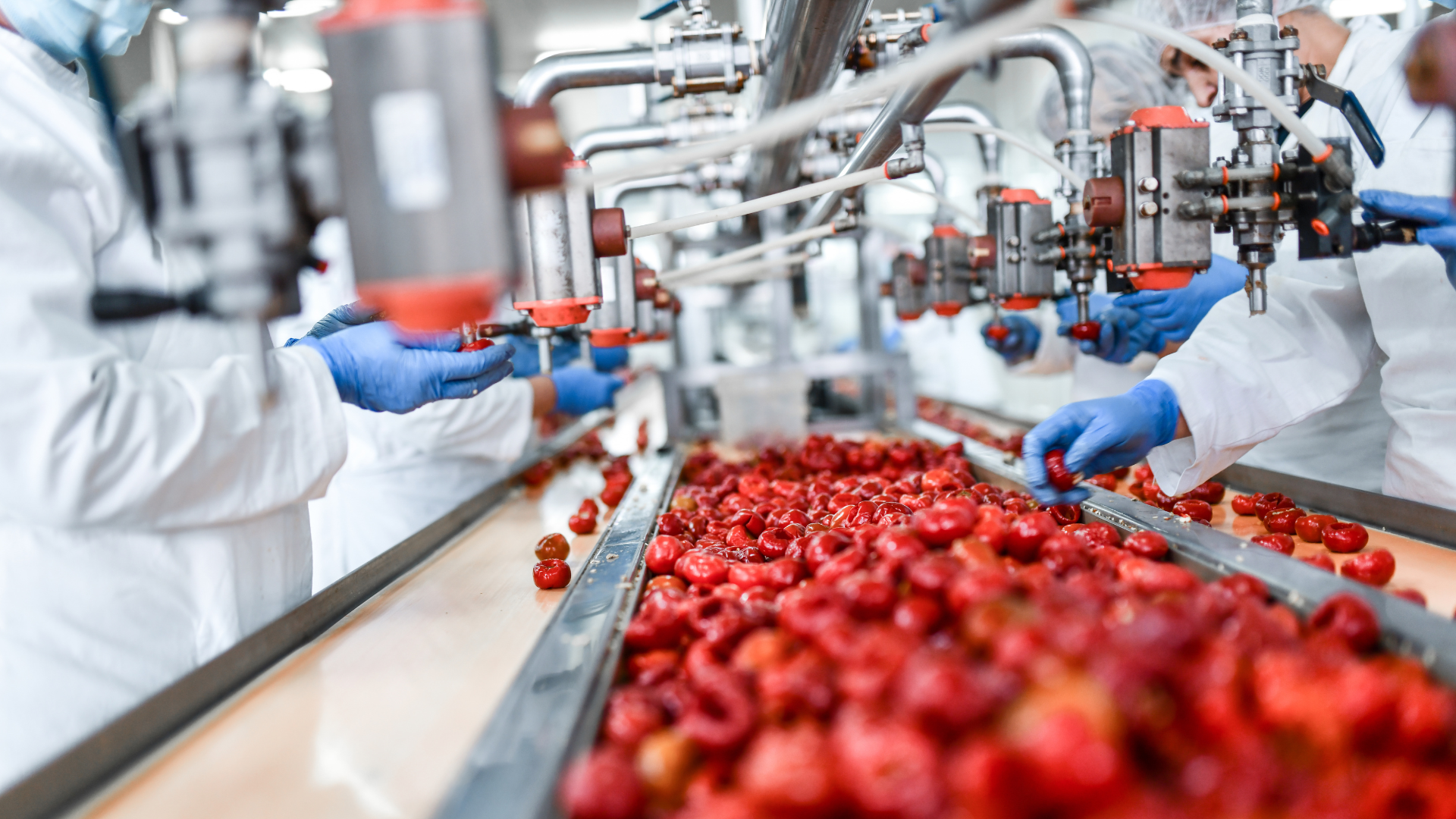
Food processing operations run around the clock, and the workforce needed to keep them running is shrinking. With over 622,000 manufacturing jobs currently unfilled in the United States and demand for food production continuing to rise, operations teams in food processing and food manufacturing facilities are navigating one of the tightest labor markets in industrial work today.
The food processing labor gap isn't a post-pandemic blip. It's a structural feature of the market, driven by demographic change, shifting workforce preferences, and intensifying competition for industrial workers across multiple sectors.
Nearly one in three workers in food manufacturing is age 55 or older, according to The Food Institute. As that cohort retires, replacement demand is rising faster than new workers are entering production roles. And younger workers — who have more options than previous generations — are increasingly choosing environments they perceive as better-compensated, less physically demanding, or more flexible.
The math is difficult: Deloitte projects that 2.1 million manufacturing positions could remain unfilled by 2030 if current trends hold. Food processing, which operates 24/7 under food safety requirements and with thin margin for downtime, absorbs those shortfalls in real time — not as a future projection, but as open jobs on today's production floor.
Food processing shares the general labor market pressures facing all industrial operations — but it has several additional factors that make consistent worker access harder than in ambient warehousing or general manufacturing.
Most food processing plants run multiple daily operations to meet production schedules and minimize spoilage risk. That creates recurring, continuous job coverage needs — not a weekly cadence, but a daily one. When a gap opens overnight or early morning, filling it quickly matters. Operations teams that rely on slow, single-channel outreach consistently face coverage shortfalls that would be manageable in a more forgiving production environment.
Unlike general warehousing, food processing roles come with food safety compliance expectations — Good Manufacturing Practice (GMP) awareness, sanitation protocols, allergen handling procedures, and in many facilities, HACCP-related requirements. Workers new to food environments often need orientation before they're production-ready. That adds time and cost to every replacement cycle, and it means that not every available industrial worker is immediately deployable in a food facility.
Food processing work is physically demanding. Repetitive motion, extended standing, temperature variation between production zones and refrigerated storage areas, and exposure to water and cleaning chemicals all contribute to faster fatigue and higher turnover than in ambient warehouse environments. Many production roles see 30–40% annual turnover — and in some segments, such as meat processing and produce packing, the rates run higher. Operations teams in these environments aren't managing a stable workforce; they're managing a constant flow of departures and replacements.
Several converging trends are making an already constrained market harder to navigate.
The food and beverage manufacturing sector is not contracting — it's expanding. BLS projects food and beverage manufacturing to add 130,000 jobs through 2034, growing at 6.2% — twice the rate of total US employment growth. The sector already employs 16% of all manufacturing workers in America, and that share is rising. The challenge isn't that the industry is declining. It's that demand for workers is growing faster than the population of people willing and available to fill production roles.
Food processing competes for workers against e-commerce fulfillment, 3PL distribution, automotive manufacturing, and general warehousing — all drawing from the same regional labor pools. Many of those environments are warmer, less physically demanding, or perceived as more flexible by workers choosing between options. In most major industrial markets in 2026, workers have real choices — and food processing facilities aren't always the first choice when alternatives are available at comparable pay.
Many food processing companies are investing in automation in direct response to labor scarcity. But automation doesn't eliminate the workforce requirement — it transforms it. Roles shift from purely manual production tasks toward machine operation, quality monitoring, and systems troubleshooting. The skills gap in food manufacturing isn't closing as automation expands. It's changing shape, with new demand for workers comfortable operating alongside technology rather than performing fully manual tasks.
The most effective responses to food processing workforce challenges combine several approaches rather than relying on any single lever.
Speed matters when coverage needs arise daily or overnight. Operations teams are moving toward platforms that can reach large pools of available workers quickly — enabling faster connections without requiring days of lead time. For food processing environments, the ability to identify workers with prior food manufacturing or food handling experience reduces orientation burden and accelerates time to job readiness. A pre-qualified pool of workers familiar with GMP basics is meaningfully more valuable than a general industrial pool when production timelines are tight.
Food processing facilities with ongoing, predictable workforce needs are building role-specific access rather than starting outreach from scratch every time. Maintaining a pool of workers familiar with a specific facility's sanitation protocols, production flow, and food safety expectations reduces ramp time and coverage risk. This is particularly valuable in high-turnover production environments where the replacement cycle is continuous rather than occasional.
No-shows are a recurring operational problem in food processing, where production lines depend on specific coverage at specific times and gaps ripple across the production floor. Operations teams that can review marketplace activity signals — historical participation patterns, engagement history, and cancellation data — before confirming a worker for a job have a meaningful advantage over those booking without context. That visibility doesn't eliminate coverage problems, but it shifts decisions from guesswork to informed matching.
The facilities seeing better retention aren't always the highest-paying — they're the most predictable. Clear job expectations before day one, structured first-week onboarding, consistent scheduling, and workplaces that communicate openly with workers all contribute to staying past the three-month mark where attrition is typically highest. For food processing operations, where the orientation cost is higher than in general warehousing, retaining workers past the 90-day mark is a meaningful operational efficiency gain.
The shortage is driven by overlapping structural factors: an aging workforce with a large cohort approaching retirement, competition from adjacent industrial sectors offering comparable pay in less demanding environments, declining interest among younger workers in production roles, and ongoing demand growth that exceeds workforce supply. These are not short-term disruptions. They are expected to persist through the decade, and operations teams managing food facilities need workforce access strategies built for sustained constraint rather than temporary tightness.
Food processing consistently sees higher annual turnover than general warehousing and many manufacturing sectors, with production roles commonly experiencing 30–40% annual turnover — and certain segments running higher. The physical demands of the work, temperature variation, repetitive motion exposure, and food safety compliance requirements all contribute to faster worker cycling. That level of turnover creates a continuous, recurring need for fast access to available workers rather than a periodic one.
The hardest-to-fill roles include experienced machine operators for automated packaging and portioning equipment, forklift operators with food facility experience, sanitation team members (due to schedule demands and physical intensity), and quality control personnel with GMP and HACCP familiarity. Entry-level production jobs are easier to fill in volume but have the highest turnover. Roles requiring food safety certifications or facility-specific training carry the highest replacement cost and the most operational risk when they go unfilled.
Food safety compliance requirements mean that not every available industrial worker is immediately ready for a food production environment. Workers coming from general warehousing or non-food manufacturing typically need facility-specific orientation before they're production-floor ready. Operations teams that can identify workers with prior food manufacturing experience have a real advantage in reducing ramp time and maintaining production quality during coverage transitions.
Demand for food processing labor will continue to grow. BLS projects the food and beverage manufacturing sector to add 130,000 jobs through 2034, with meat processing adding more than 35,000 jobs alone. That projected growth assumes available workers — and current structural trends suggest supply will remain constrained. Operations teams that invest now in scalable workforce access rather than fixed agency relationships will be better positioned as competition for available workers intensifies further.
Food processing is one of the most labor-dependent segments in industrial operations, and the structural forces tightening the workforce aren't resolving on their own. For operations teams that need faster access to available workers — without long-term commitments or agency lock-ins — Spotwork's marketplace connects food processing companies with workers across 35+ U.S. markets, with SpotSource outreach that reaches available worker pools in minutes and 24/7 platform support when jobs are live.