.avif)
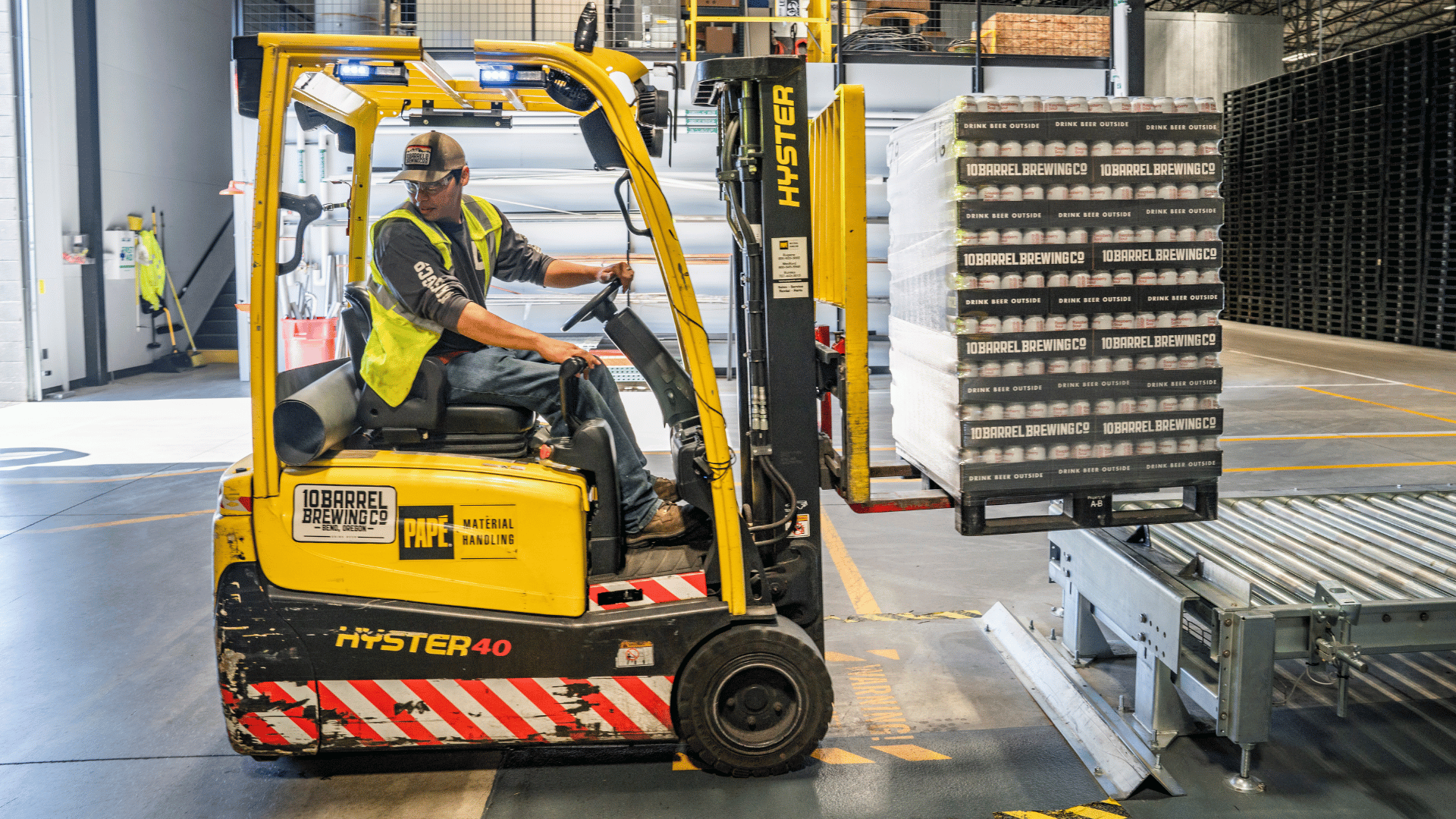
A new labor app called WorkWhile just launched a free certification program aimed squarely at the forklift operator shortage. That is a telling move. Forklift operator is one of the few warehouse roles a Company cannot just post and fill with any available worker: OSHA requires every operator to be trained, evaluated, and certified before they touch a powered industrial truck, and re-evaluated on a regular cycle after that. Demand for the role keeps climbing. The pool of workers who already hold that certification is not growing at the same pace, and that gap is exactly where peak-season plans stall out.
Under 29 CFR 1910.178(l), only trained and evaluated operators can run a forklift, and employers are required to re-evaluate each operator's performance on a recurring basis, not just once at onboarding. There is no shortcut version of this requirement and no way to substitute a fast learner for a certified one. For a Company trying to fill an open forklift operator role quickly, that turns a normal timeline into a sourcing and verification problem before it is even a scheduling problem.
The Bureau of Labor Statistics projects roughly 76,400 annual openings for material moving machine operators, the broader occupational category that includes forklift operators, with only modest overall employment growth in the category. That is a steady stream of open roles chasing a certified worker pool that expands far more slowly, since certification takes real training hours and an evaluated demonstration, not just a job posting.
The WorkWhile program is one of several recent efforts aimed at building more certified operators rather than competing harder for the existing pool. That change in approach makes sense: when the constraint is a legal certification requirement and not just interest in the role, posting more job ads does not create more qualified applicants. It just means more Companies competing for the same certified workers.
Training pipelines take time to pay off, and most Companies need a certified forklift operator this week, not next quarter. Spotwork's marketplace is built around curated, role-specific worker pools: when a Company posts a job that requires forklift certification, it reaches available workers who already hold it, not a generic pool of applicants who may or may not be qualified. That is faster than posting an open role and hoping, and it comes without any long-term commitment or agency lock-in. Spotwork operates in 35+ markets with 300,000 Spotters on the platform, a 95%+ fulfillment rate, and 24/7 platform support for both Companies and Spotters when a job is live.
If a certified forklift operator role has been open longer than it should be, post the job on Spotwork and connect with available, already-certified workers on the marketplace instead of waiting on the next application to come in.
Yes. Under OSHA's 29 CFR 1910.178(l) standard, only trained, evaluated, and certified operators may operate a powered industrial truck, and employers must re-evaluate each operator's performance on a recurring basis.
Demand for the role keeps climbing, with the Bureau of Labor Statistics projecting roughly 76,400 annual openings for material moving machine operators, but the certified worker pool grows slowly because certification requires real training hours and an evaluated demonstration, not just a job posting.
There is no single fixed expiration date under OSHA's standard, but employers are required to evaluate each certified operator's performance on a recurring basis and provide refresher training after an unsafe incident or a failed evaluation.
Instead of posting a generic opening and hoping applicants already hold certification, Companies can specify the certification needed when posting a job on a marketplace like Spotwork and reach available workers who already have it, cutting out the sourcing and verification delay.